

interplane.Get Omega
Public Wall of Celebration · A Celebration to Humanity

Standing on the shoulders of humanity's builders.

Computing did not fall from the sky. Across nearly two centuries, mathematicians, physicists, cryptanalysts, compiler writers, chip designers and open-source engineers turned logic, copper and sand into instruments for individual human minds. On each plaque below, you can read what they gave humanity and concretely how I learned from their work and adapted it into Omega.

Before a single byte of Omega or Sovereign Intelligence™ existed, I walked backwards decade by decade through computing history, studying how these pioneers built assemblers, compilers, flight executives, transistors, microprocessors and open protocols from raw metal. Walking that exact ladder today, from a 408-byte machine-code seed up to open silicon, is a debt of gratitude to the humans who made it possible.

Drake Stapleton · Dedicated to the heroes of the computing century · 16 self-hosted portraits, zero trackers
Era I · 1840s to 1940s

Foundations of Logic, Machine & Information

Before the first transistor switched a single volt, five thinkers gave computing its mathematical soul: symbolic engines, separated memory, universal computability, stored-program hardware and the bit itself.

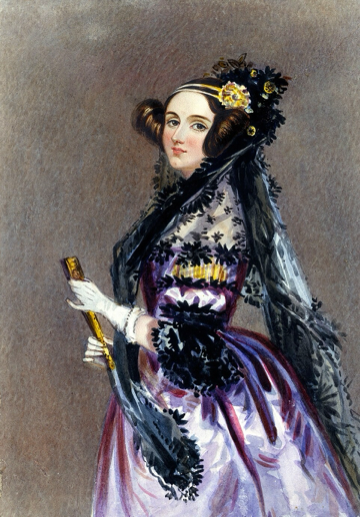
  1. Watercolor portrait of Ada Lovelace by Alfred Edward Chalon, circa 1840
    1815-1852 · First Published Algorithm

    Ada Lovelace

    What she gave humanity: Authored the 1843 Notes on the Analytical Engine, including Note G's step-by-step algorithm for Bernoulli numbers and the insight that general-purpose engines can weave symbols, music and formal rules far beyond pure arithmetic.

    How I adapted it into Omega

    I built Omega around Lovelace's distinction between raw arithmetic and verified symbolic rules. In Omega NG, functions carry machine-checkable requires and ensures contracts alongside canonical ΩIR and SEMANTIC_ID hashes so programs express intent as verifiable symbolic structure, not opaque blobs. Inspect Omega IR v2 contracts →

    Portrait: Alfred Edward Chalon, c. 1840, Science Museum Group (Public domain, Wikimedia Commons)

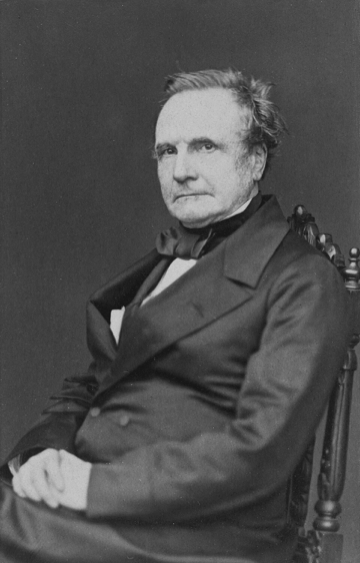
  2. Photographic portrait of Charles Babbage, 1860
    1791-1871 · The Analytical Engine

    Charles Babbage

    What he gave humanity: Conceived the programmable mechanical computer in Victorian London, explicitly separating the arithmetic processor (the Mill) from addressable memory (the Store) with punched-card control, loops and conditional branching.

    How I adapted it into Omega

    I kept Babbage's clean physical boundary between compute and memory instead of hiding allocations behind an unbounded heap. Omega GPU servers reserve fixed startup slabs for weights and KV pages once at launch, returning HTTP 503 server_busy rather than letting runaway memory kill the machine. See zero-heap startup slabs →

    Portrait: Unknown photographer, 1860 (Public domain, Wikimedia Commons)

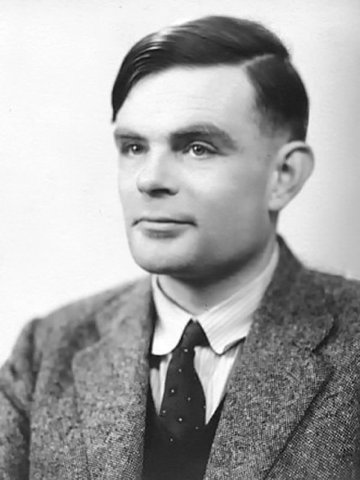
  3. Photographic portrait of Alan Turing by Elliott and Fry, 1951
    1912-1954 · Universal Computation

    Alan Turing

    What he gave humanity: Defined the universal Turing machine in his 1936 paper On Computable Numbers, proving one tiny machine can execute any computable description, led Hut 8 Enigma cryptanalysis at Bletchley Park and designed the ACE computer.

    How I adapted it into Omega

    Turing's universal machine taught me that you do not need a gigabyte toolchain to bootstrap a computing universe. I wrote a 408-byte hand-auditable machine-code seed (seed0.hex) and climbed step by step (seed0 -> hex1 -> asm2 -> om4 -> omc) until a tiny inspectable kernel compiled the full stack itself. Walk the 408-byte seed chain →

    Portrait: Elliott & Fry, 29 March 1951 (Public domain, Wikimedia Commons)

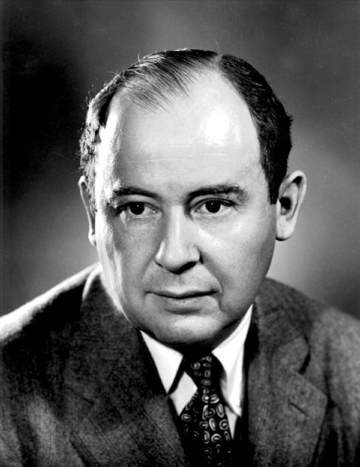
  4. Los Alamos identification portrait of John von Neumann, 1940s
    1903-1957 · Stored-Program & Reliable Automata

    John von Neumann

    What he gave humanity: Synthesized the EDVAC stored-program architecture in 1945, built the IAS machine that shaped modern processors, and proved in his theory of reliable organisms that redundant voting can build trustworthy computation from faulty components.

    How I adapted it into Omega

    I borrowed both halves of von Neumann's genius: direct native machine-code emission into stored memory, plus his fault-tolerant redundancy insight turned into Omega's 4-strand Byzantine compiler braid (N = 3f + 1). Four independent ~400-byte seeds vote on the compiled binary, quarantining and regrowing any poisoned strand. See the 4-strand braid →

    Portrait: Los Alamos National Laboratory, 1940s (PD-LosAlamos, Wikimedia Commons)

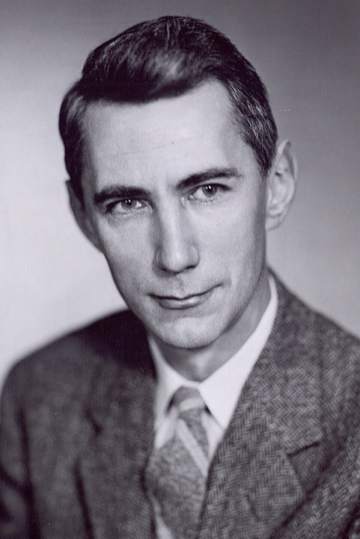
  5. Bell Telephone Laboratories portrait photograph of Claude E. Shannon, circa 1956
    1916-2001 · Switching Logic & Information Theory

    Claude E. Shannon

    What he gave humanity: Proved in 1937 that Boolean algebra governs electrical switching circuits, then published A Mathematical Theory of Communication in 1948, defining the bit, information entropy and exact physical channel limits.

    How I adapted it into Omega

    Shannon's math runs through three pillars of my stack: information-theoretic Vernam+MAC secrecy in omega-aegis, entropy-gated specialist routing in spclip (choosing which DNA strand is most certain per token), and refusing hype by measuring against physical hardware bandwidth ceilings like 273 GB/s LPDDR5X. Explore entropy-gated spclip →

    Portrait: Bell Telephone Laboratories, c. 1956; scan by Tekniska Museet, CC BY 2.0 (Wikimedia Commons)

Era II · 1947 to 1970s

The Birth of Silicon, Compilers & Modern Systems

From a germanium crystal at Bell Labs to lunar landing flight software, portable compilers, Unix, C and the first single-chip microprocessors, these builders forged the physical and architectural layers we live on.

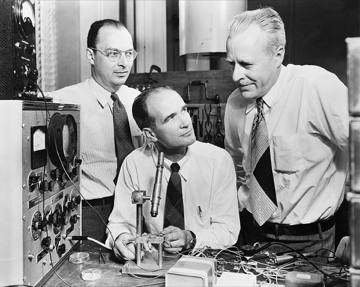
  1. John Bardeen, William Shockley and Walter Brattain at Bell Telephone Laboratories in 1948
    1947-1948 · Invention of the Transistor

    John Bardeen, Walter Brattain & William Shockley

    What they gave humanity: Demonstrated the point-contact transistor at Bell Labs in December 1947 (Bardeen and Brattain) followed by the bipolar junction transistor (Shockley, 1948), replacing fragile vacuum tubes with solid-state semiconductor switches.

    How I adapted it into Omega

    Their solid-state physics reminded me that software obeys the silicon underneath, not layers of abstraction. Instead of streaming tensors blindly through Python and CUDA wrappers, I designed L2-pinned kernels and direct raw-ioctl GPU dispatch straight to Blackwell hardware with zero CUDA user-space libraries. See direct metal GPU dispatch →

    Photo: AT&T / Bell Telephone Laboratories, 1948 (Public domain, Wikimedia Commons)

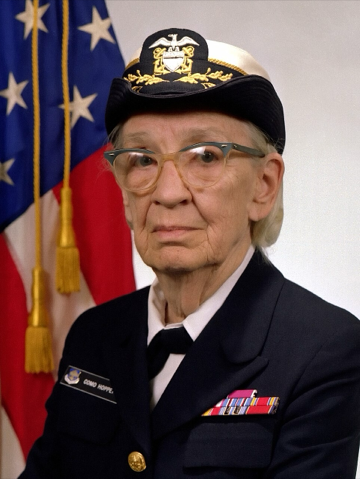
  2. Official U.S. Navy portrait of Rear Admiral Grace Murray Hopper by James S. Davis, 1984
    1906-1992 · Machine-Independent Compilers

    Grace Murray Hopper

    What she gave humanity: Programmed the Harvard Mark I, built the A-0 linker/compiler in 1952 and FLOW-MATIC, and proved that compilers could bridge readable human notation and raw machine instructions across different computers.

    How I adapted it into Omega

    Hopper's belief that one readable source should target diverse hardware directly inspired Omega's unified 24-field TargetDesc backend and human-friendly Omega NG infix surface. One static compiler lowers clean source straight to ARM64, x86-64, Apple Silicon Mach-O and SM121 GPU SASS with zero bloated runtime. Inspect TargetDesc & Rosetta →

    Portrait: James S. Davis, U.S. Navy, 20 January 1984 (Public domain, Wikimedia Commons)

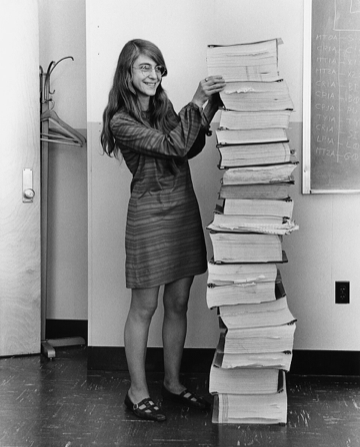
  3. Margaret Hamilton standing beside printed Apollo Guidance Computer flight software listings at MIT, 1969
    b. 1936 · Apollo On-Board Flight Software

    Margaret Hamilton

    What she gave humanity: Directed the MIT Instrumentation Lab Software Engineering Division for NASA's Apollo Guidance Computer; her team's priority-scheduled asynchronous executive shed overloaded radar tasks and saved the Apollo 11 lunar descent.

    How I adapted it into Omega

    Hamilton's lunar-descent discipline became Omega's core safety doctrine: static loop bounds (bound N) so loops cannot hang silently, fixed startup memory (zero OOM kills), hardware overflow and out-of-bounds traps (exit 101/103), and fail-closed verification gates that refuse bad data instead of guessing. Read our fail-closed proof rules →

    Photo: MIT Instrumentation Laboratory / NASA, 1969; restoration by Adam Cuerden (Public domain, Wikimedia Commons)

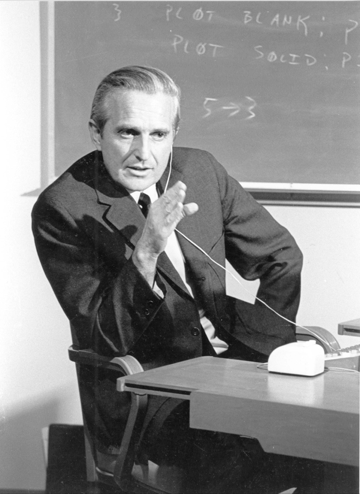
  4. Douglas Engelbart with headset and prototype computer mouse at SRI International, December 1968
    1925-2013 · Augmenting Human Intellect

    Douglas Engelbart

    What he gave humanity: Led the Augmentation Research Center at SRI and, in his landmark December 1968 demonstration, unveiled the computer mouse, hypertext, live collaborative editing, windowed video and version control working together to augment human intellect.

    How I adapted it into Omega

    Engelbart's vision of augmenting individual human minds, not replacing them with a corporate collective, is the heart of Sovereign Intelligence™. I built local tools that stay strictly under one person's control: Omega Studio for personal training, composable OLLMSP01 strands on Strand Exchange, and Hop for daily thought.

    Photo: SRI International, December 1968, CC BY-SA 3.0 (Wikimedia Commons)

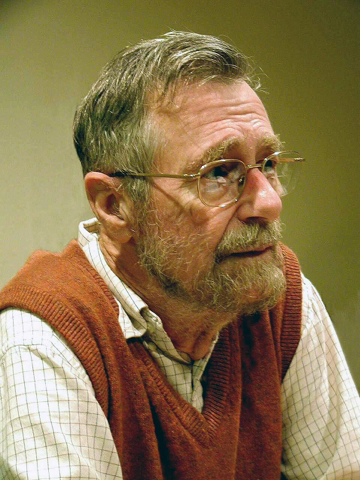
  5. Portrait photograph of Edsger W. Dijkstra by Hamilton Richards, University of Texas at Austin
    1930-2002 · Algorithms & Formal Proof

    Edsger W. Dijkstra

    What he gave humanity: Formulated Dijkstra's shortest-path algorithm, built an early ALGOL 60 compiler, introduced semaphores and mutual exclusion primitives, and insisted throughout his EWD manuscripts that mathematical clarity and formal proof belong in real code.

    How I adapted it into Omega

    Dijkstra taught me that testing shows bugs, while proof rules them out. I paired pure-Omega compilers and physics dispatchers directly with machine-checked Lean 4 theorems carrying zero sorry placeholders (29 braid/helix theorems plus 16 PhysicsDispatch.lean safety proofs) and banned hidden global side effects. Check Lean 4 proofs in SI 2.0 →

    Portrait: Hamilton Richards, University of Texas at Austin, CC BY-SA 3.0 (Wikimedia Commons)

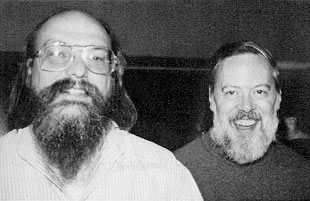
  6. Ken Thompson and Dennis Ritchie smiling side by side
    b. 1943 & 1941-2011 · Unix, C & Trusting Trust

    Ken Thompson & Dennis Ritchie

    What they gave humanity: Created Unix and the C programming language at Bell Labs, establishing small composable tools and portable systems programming, while Thompson's 1984 Turing Award lecture Reflections on Trusting Trust exposed the deep vulnerability of untrusted compiler binaries.

    How I adapted it into Omega

    Thompson's Trusting Trust warning shaped Omega's foundation: I defeated blind compiler trust by growing four independent ~400-byte seeds that converge bit-for-bit on one compiler, then began cleanly retiring legacy C and libc from the forward stack so small, composable pure-Omega binaries stand alone. Meet The Monk verifier →

    Photo: Unknown photographer, via the Jargon File (Public domain, Wikimedia Commons)

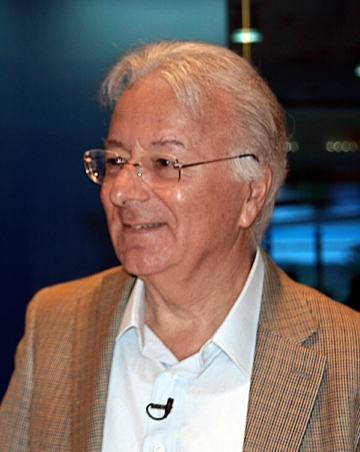
  7. Portrait photograph of Federico Faggin by Intel Free Press, September 2011
    b. 1941 · Silicon-Gate MOS & Intel 4004 / Z80

    Federico Faggin

    What he gave humanity: Invented self-aligned silicon-gate MOS integrated-circuit technology at Fairchild in 1968, led the physical design and realization of the Intel 4004 (the first commercial single-chip microprocessor) in 1971, and founded Zilog to create the Z80.

    How I adapted it into Omega

    Faggin put an entire CPU onto one compact piece of silicon with zero wasted area. I carried that exact craftsmanship into binary size and startup speed: Omega emits tiny standalone ELF, Mach-O and bare-metal EFI executables (a 32 KB web server, a 281 KB 35B LLM runner) without gigabyte container walls. See compact binary receipts →

    Portrait: Intel Free Press, September 2011, CC BY-SA 2.0 (Wikimedia Commons)

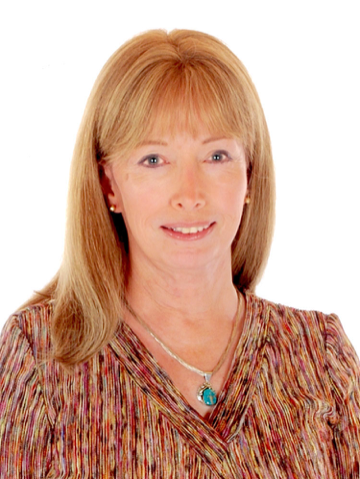
  8. Portrait photograph of Lynn Conway by Charles Rogers, July 2006
    1938-2024 · Superscalar CPUs & VLSI Revolution

    Lynn Conway

    What she gave humanity: Invented generalized dynamic instruction handling (out-of-order superscalar execution) at IBM ACS in 1965 and co-authored Introduction to VLSI Systems with Carver Mead, opening custom silicon design rules and prototyping to universities and small teams.

    How I adapted it into Omega

    Conway broke the priesthood around chip design so outsiders could build real silicon. Following her spirit, I opened up Blackwell SM121 GPU SASS emission, QMD dispatch packing and evolutionary warp-stall scheduling inside a small open compiler so individual builders can program modern accelerators directly. Inspect the SM121 JIT →

    Portrait: Charles Rogers, July 2006, CC BY-SA 2.5 (Wikimedia Commons)

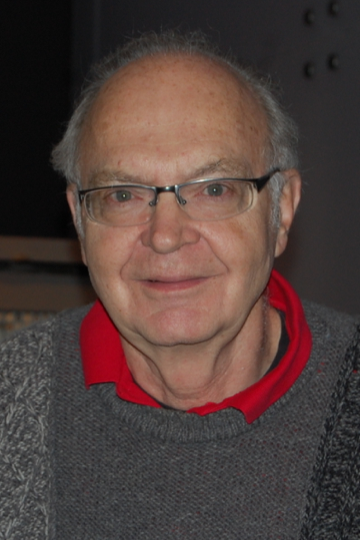
  9. Portrait photograph of Donald E. Knuth by Alex Handy, January 2011
    b. 1938 · Analysis of Algorithms & TeX

    Donald E. Knuth

    What he gave humanity: Established formal analysis of algorithms in The Art of Computer Programming, introduced LR(k) parsing and literate programming, and built TeX and METAFONT so mathematical typography remains bit-stable across decades.

    How I adapted it into Omega

    Knuth's obsession with decade-stable, bit-exact TeX output set the bar for Omega's reproducibility gates. We demand double-run bit-identical builds, deterministic SHA-256 manifests and immutable sidecars so a build reproduced years from now yields the exact same bytes (and we even typeset with his Latin Modern Roman). See deterministic SHA-256 checks →

    Portrait: Alex Handy, 11 January 2011, CC BY-SA 2.0 (Wikimedia Commons)

Era III · 1989 to Today

The Open Web, Free Software & Sovereign Silicon

In our own era, the breakthroughs that protected human freedom came from builders who refused to enclose their inventions, releasing open protocols, a free kernel and distributed history tools into the public commons.

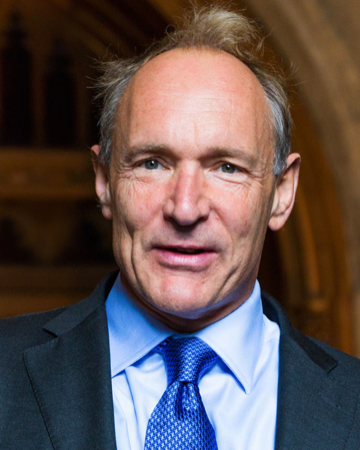
  1. Portrait photograph of Sir Tim Berners-Lee by Paul Clarke, September 2014
    b. 1955 · Inventor of the World Wide Web

    Tim Berners-Lee

    What he gave humanity: Invented HTTP, HTML, URLs and the first web browser and server at CERN in 1989-1990, and worked with CERN to place the Web into the public domain royalty-free in April 1993 so humanity could share knowledge without gatekeepers.

    How I adapted it into Omega

    I honored Berners-Lee's original open Web by stripping away surveillance bloat. This website is built and policy-checked by one pure-Omega binary with zero trackers, zero cookies, zero third-party fonts and strict CSP, alongside pure-Omega zero-JS web apps like the online compiler and Strand Exchange.

    Portrait: Paul Clarke, 24 September 2014, CC BY-SA 4.0 (Wikimedia Commons)

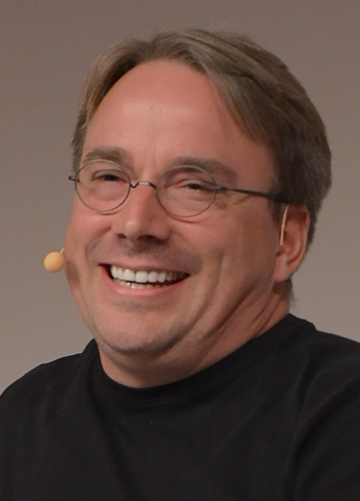
  2. Portrait photograph of Linus Torvalds at LinuxCon Europe, October 2014
    b. 1969 · Creator of Linux & Git

    Linus Torvalds

    What he gave humanity: Released the Linux kernel in 1991 and built Git in 2005, giving engineers around the globe an open, battle-hardened operating system kernel and cryptographic content-addressed version control with no central owner.

    How I adapted it into Omega

    Torvalds showed that plain Git and cryptographic content hashes keep power in the hands of whoever holds a clone. Interplane runs an open pure-Omega Git forge with zero-account HTTPS clones, chains evidence with SHA-256 Merkle receipts, and builds toward bare-metal aienux and open sovereign GPU drivers. Explore the Interplane forge →

    Portrait: Krd (crop by Von Sprat), 15 October 2014, CC BY-SA 4.0 (Wikimedia Commons)

Era IV · 2020s & Forward · Carrying the Torch

The Open Sovereign Builders of Today

The line does not end with museum plaques. It continues through independent compiler authors, open-silicon engineers, formal-verification researchers, educators like Computerphile who pass down hard-won engineering craft, and solo builders proving that individuals can still understand, inspect and own their machines from the first instruction up.

Interplane and Sovereign Intelligence™ exist to keep that torch lit: small reproducible seeds, plain Git clones without gatekeepers, honest failure records beside working receipts, and local intelligence owned outright by the person holding the hardware.